
Fitch Ratings has affirmed India's sovereign credit rating at 'BBB-' with a stable outlook, acknowledging robust growth prospects and strong external finances. However, the agency highlighted concerns over elevated government debt, lagging structural metrics, and potential fiscal spending pressures due to rising youth unemployment.

The Indian stock market experienced a significant downturn, with the Sensex crashing over 1,000 points and the Nifty hitting a fresh 52-week low, driven by sustained selling from foreign institutional investors, the RBI's monetary policy tightening, and elevated Brent crude prices.

India's Agriculture Secretary Atish Chandra has warned that the upcoming rabi (winter) crop season is likely to be challenging for rainfed areas due to the strengthening El Nio weather pattern, potentially affecting foodgrain production. This comes as Maharashtra declares drought in nearly 74 per cent of its talukas, highlighting the immediate impact of climate change.

After a significant 9.9% depreciation in FY26, the Indian rupee has shown comparative stability in the first half of FY27, depreciating by only 1.1%, attributed to regulatory interventions and measures to attract foreign capital, despite ongoing global pressures from rising crude oil prices and foreign investor outflows.

Apple's upcoming iPhone 18 lineup is set to cost 20 to 43 per cent more in India, primarily due to rising global memory component costs and a depreciating rupee, while the new foldable iPhone Duo will be priced between Rs 3 lakh and Rs 4.5 lakh, matching the cost of some hatchback cars.

Indian benchmark indices Sensex and Nifty experienced significant declines in early trade, driven by soaring crude oil prices amidst escalating tensions in West Asia, coupled with weak global market trends and foreign fund outflows.
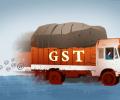
India's Goods and Services Tax (GST) receipts, after accounting for refunds, surged by 18.1 per cent annually to approximately 1.77 trillion in September, marking its fastest growth in six months. This increase was primarily driven by a significant rise in tax revenue from imports, which grew 26 per cent annually.

A year after GST rates were rationalised, retail growth in automobiles has sustained beyond the initial festival surge, led by two-wheelers and passenger vehicles (PVs), with the Fada data showing rural markets emerging as a key driver of the post-GST demand recovery.

Unified Payments Interface (UPI) transactions in India reached Rs 29.8 lakh crore in August, approaching record levels. Volume also hit a new high of 24.51 billion transactions, driven by festive activities like Raksha Bandhan. The digital payment system continues its rapid growth, expanding its global presence to 11 countries, with further growth anticipated during the upcoming festive season and new use cases like credit on UPI.

External Affairs Minister S Jaishankar met US Secretary of State Marco Rubio on the sidelines of the UN General Assembly session in New York. India raised its concerns regarding the recently signed "Lindsey O. Graham Sanctioning Russia and Iran Act of 2026," which authorises tariffs on countries buying Russian oil and gas. Both leaders also discussed bilateral relations, regional priorities, and the situations in the Gulf and Ukraine.

India's leading IT companies are anticipated to report subdued revenue growth and largely stable margins for the July-September quarter, as clients maintain tight discretionary budgets, with analysts closely watching the conversion of strong bookings into revenue and the impact of AI on traditional services.

Indian benchmark indices, Sensex and Nifty, traded flat in early deals due to elevated crude oil prices exceeding USD 100 per barrel and persistent geopolitical tensions, which subdued investor risk appetite.

As India's festive season approaches, passenger vehicle dealers are seeing a notable increase in inventories, yet discounts remain surprisingly moderate compared to previous years, signalling a tighter demand-supply balance in the automotive market.

India's passenger vehicle sales are estimated to have surged by approximately 35 per cent to about 4.5 lakh units in August, driven by strong performances from major automakers like Maruti Suzuki India, Tata Motors Passenger Vehicles, and Mahindra & Mahindra, with the industry entering the festive season with optimism.

Citron, a brand under Stellantis, anticipates that three-fourths of its sales in India will originate from Tier-II, Tier-III, and smaller cities within the next five years, a significant increase from its current 55 per cent, as it expands its retail network beyond major urban centres.

India's External Affairs Minister S Jaishankar, addressing the UN General Assembly, strongly criticised Pakistan for its support of terrorism, asserting India's right to self-defence and stating that friendship cannot coexist with terrorism. He also highlighted India's global responsibilities, contributions to the Global South, and its stance on reformed multilateralism and AI.

India's Pranavi Urs has taken a three-stroke lead in the Asian Games women's golf competition after a superb four-under 66 in the third round. She is now in strong contention for an individual gold medal, with a total of 15-under 195. Her performance also propelled the Indian women's team into second place, four shots behind China.

India's manufacturing sector growth decelerated to a five-year low of 52.8 in August, down from 53.5 in July, as output and new orders moderated due to softer demand conditions, according to the HSBC India Manufacturing Purchasing Managers' Index (PMI).

Former Chief Economic Adviser Krishnamurthy V Subramanian outlines India's strategy to become a USD 55 trillion economy by 2047. The plan hinges on leveraging its young demographic in AI, dominating sunrise sectors like space and defence tech, attracting FDI, and achieving sustained 8% GDP growth.

Systematic Investment Plan (SIP) returns for smallcap and midcap mutual funds have seen a significant rebound, with average one-year SIP returns now at 19.1 per cent for smallcap funds and 13.5 per cent for midcap funds, according to Value Research data. This recovery is expected to revive momentum in the retail mutual fund industry, which had experienced a moderation in growth indicators.

Indian benchmark indices Sensex and Nifty rebounded on Wednesday, driven by a decline in crude oil prices below USD 100 per barrel and optimism surrounding a potential de-escalation of the conflict in West Asia.

Meesho, a value-commerce platform targeting middle- and lower-income geographies, is poised for significant growth driven by its asset-light model and low fulfilment costs, but faces intense competition from e-commerce giants and high valuations.

Non-resident Indians are increasingly investing in luxury homes in India, driven by geopolitical uncertainties, particularly the Iran war. This trend is observed across major cities like Mumbai, Bengaluru, and the National Capital Region, with developers noting a significant rise in NRI pre-sales. While some see it as a temporary shift, others believe India is becoming a stable, long-term investment destination for NRIs, especially those from West Asia.

India's automobile retail sales reached an unprecedented 24.23 lakh units in August, marking a 17.51 per cent year-on-year growth, with alternative fuels (CNG, hybrid, and electric) collectively surpassing petrol in the passenger vehicle segment for the first time.

Non-banking financial companies (NBFCs) reported encouraging results for Q4FY26 with improved asset quality and earnings, but analysts maintain a cautious near-term outlook due to geopolitical tensions, monsoon risks, and specific portfolio concerns.

Indian benchmark indices Sensex and Nifty opened higher, extending gains from the previous session, driven by a rally in global markets and a slight cooling in crude oil prices. Optimism around a potential meeting between US and Iranian presidents also contributed to positive sentiment.Later both indices pared gains and were trading in red. Track Sensex, Nifty on September 22.

The Unified Payments Interface (UPI) has completed a decade since its launch, becoming the backbone of India's digital payments ecosystem. It has seen exponential growth in transaction volume and value, expanding financial inclusion and setting a global benchmark for real-time payments.

The National Stock Exchange of India's (NSE) mega Rs 22,569-crore initial public offering (IPO) was subscribed 43 per cent on its first day of bidding, making it India's second-largest public issue after Hyundai Motor India's Rs 27,870-crore IPO in 2024.

The National Stock Exchange of India's (NSE) mega Rs 22,569-crore initial public offering (IPO) opened for subscription, receiving 9 per cent bids on its first day, with strong participation from anchor investors.

75% of India's 60 million digital-payment merchants have never recorded a transaction above 2,000.

India's women's 10m air rifle team, comprising Sonam Uttam Maskar, Elavenil Valarivan, and Vidarsa Vinod, secured a silver medal at the Asian Games, marking the country's first medal in shooting. The trio finished second behind China, with Sonam and Elavenil also qualifying for the individual finals, raising hopes for more medals.
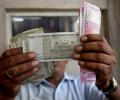
Government sources clarify that the 0.4% merchant discount rate (MDR) on UPI transactions above Rs 2,000, effective October 15, will not be passed on to consumers. The charge, paid by merchants, aims to create a sustainable revenue framework for the digital payments ecosystem, with funds shared among banks and UPI entities. Small merchants using QR codes for up to Rs 1 lakh monthly are exempt.

India's net direct tax collection has surged by 13 per cent to over Rs 12.12 lakh crore by September 17 in the current fiscal year, driven by a significant increase in advance tax payments from corporates, according to CBDT data.

Property insurance premium rates are increasing by 25-30 per cent, primarily due to a reduction in discounts, following substantial claims from natural calamities like the Gujarat floods, which caused an estimated 5,000 crore in losses.

Indian paint majors, including Asian Paints, Berger Paints, and Kansai Nerolac, reported better-than-expected performance in Q4FY26, driven by steady demand, improved product mix, and strategic price hikes. The sector is also benefiting from reduced competitive intensity as new players also increase prices, narrowing the gap with incumbents.

Hyundai Motor India is set to outpace the broader passenger vehicle market, projecting an 8-10 per cent domestic sales growth in H2FY27, fueled by strategic launches of a new mid-size SUV and a dedicated electric vehicle, alongside increased production capacity.

Leading appliance and consumer electronics manufacturers are set to increase prices of air conditioners, LED TVs, washing machines, and other products by 5 to 8 per cent from October 1, citing rising input costs for metals like copper and steel, crude derivatives, and currency exchange volatility due to the West Asia crisis.

'I don't really expect the August increase in food prices, which was close to 6 per cent, to persist as we go close to the end of this year.'

Indian benchmark indices, Sensex and Nifty, closed nearly flat on Thursday, influenced by the US Federal Reserve's interest rate hike and indications of further monetary tightening. Despite some intraday gains, caution prevailed, with foreign institutional investors continuing to offload equities. Meanwhile, the National Stock Exchange of India's (NSE) mega initial public offering opened for subscription, garnering 39 per cent subscription on its first day.

Tempsens Instruments India has emerged as the strongest mainboard IPO debutant of calendar year 2026 so far, delivering a 95.55 per cent gain on its listing day, surpassing all previous top performers and contributing to August being the strongest month for listing gains this year.
